
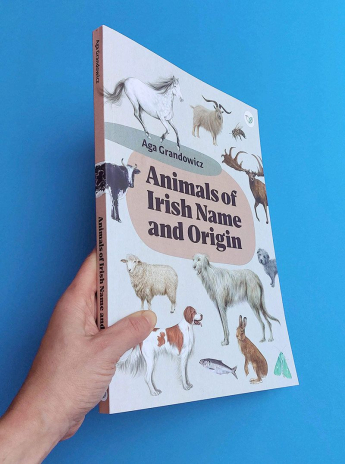
Natural World Publishing is proud to introduce Animals of Irish Name and Origin, a richly illustrated and meticulously researched book by Aga Grandowicz. This landmark publication explores Ireland’s wildlife through the lens of taxonomy, language, history, and place. Animals of Irish Name and Origin brings together forty-nine animals whose names and identities are deeply rooted in Ireland, offering readers a visually striking guide to species that have shaped, and been shaped by the island’s landscape and culture.
Blog
Jan 1
Nov 24, 2025
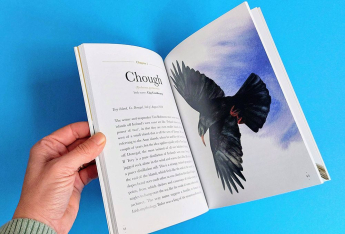
‘I could be forgiven for anthropomorphism if I said that Northern Ireland’s last choughs did not seem to exhibit the joyful, carefree behaviour of the Tory birds. The fact that choughs have held on in Tory and Rathlin, after disappearing from most of Ireland, illustrates an interesting aspect of island ecology. Because an island is effectively its own little ecosystem, cut off to a certain extent from what is happening on the mainland, it can act as a refuge for a species that is under pressure in other places. Tory holds another example of this phenomenon: after saying goodbye to the choughs, as we walked along the road on the edge of the village, another strange call started up, and continued persistently. It was a corncrake in a field right beside the road, giving its mechanical, two-note buzz of a call that was once heard throughout the Irish countryside. Another victim of agricultural intensification, the corncrake underwent a massive decline in population in the 20th century. Tory is now one of the only places where its voice is still commonplace. As we sat down on a wall to listen to it, a couple of women came down the road. “Have you heard the corncrake yet?” I asked, thinking the women were also visitors from the ferry. “Yes,” said the first woman cheerfully, in an accent that said she was from the island or nearby. “Those birds never shut up.” They went on without stopping. If I had known they were from the area, I would have greeted them in Irish. For Tory is a redoubt not only for threatened birds and Fomorians, but also the Irish language. According to the 2022 Census, Tory has the highest proportion of Irish speakers of all the Gaeltacht Planning Areas, with 69% of the island’s population using Irish every day outside of the education system.’
Nov 23, 2025
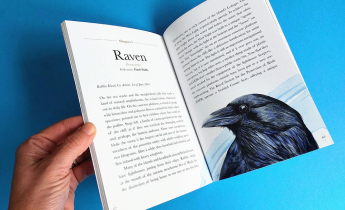
‘It is not fanciful to see certain similarities between ravens and humans. In fact, such a comparison has driven much of the research into the workings of the corvid mind. If we are to understand our own minds, we must be able to make comparisons and contrasts, not only with our own ape relatives but also with animals more distantly related to us. In their 2004 review article, The Mentality of Crows, Nathan Emery and Nicola Clayton describe this as an example of convergent evolution, two species evolving similar adaptations to meet the same challenges. They see corvids and apes as possessing a similar mental “toolkit” comprising four main components: causal reasoning, flexibility, imagination, and prospection (the ability to think about the future). Interestingly, they argue that is the animals’ minds themselves, and not their brains, that have evolved convergently. Like ours, the corvid brain is large in comparison with the body, but its actual structure is quite different.’
Nov 23, 2025
‘I made another discovery through my forensic analysis of the crime scene. Taking the two jagged ends of the rubber seal in my hands, I saw that they fit together perfectly. The little chips that had been pecked out of the length of rubber were scattered under the windowsill. No material was missing. The bird had not actually been eating the rubber, only destroying it. It was unlikely to have suffered any ill effects then and was probably perfectly happy with its day’s work.’
Nov 22, 2025
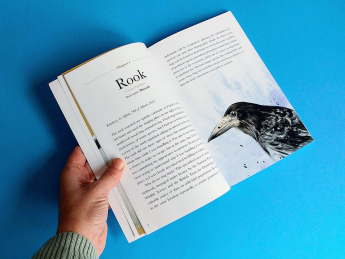
'The rook stands out as our most social corvid species. We saw evidence of this that same morning, on our way to the ringing, when we had stopped at a petrol station to refuel ourselves with food from the deli. This was one of those small, fairly quiet places that seem so specific to their exact location – not one of the massive busy new plazas on the motorways that are all so similar they can blur your journeys together, giving a sense that you can’t be quite sure where in the country you were. We brought our food out to the car and used its roof as a picnic table. While we ate, we watched the spring morning form around us as the sun rose and gave new solidity to the buildings, and more people and cars began to stir into life. The local rooks, first one bird, and then several, were watching us at our watching, in that way of congregating quickly common to all social animals from ants to teenagers. They had come from the local rookery, a cluster of untidy stick nests bunched at the tops of the trees overlooking the forecourt. This is how we most often encounter rooks: they like to build these communal nesting sites on the edge of country towns or beside farms, in order to share whatever food we make available. This is one of the fascinating things about corvids: their intelligence and adaptability let them live alongside us, thriving in the same human-altered landscapes that many other birds find unsuitable. In the case of rooks, their colonies mirror our own tendency to build on the landscape, as they throw together their noisy little villages high in the trees. In farming areas, you might see a flock of rooks foraging through a recently worked field together, picking for insects with such a careful, formal air that they can look like little black-clad policemen searching for clues. At this petrol station, however, it was clear that the rooks’ diet included a lot of spicy potato wedges and the ends of breakfast rolls.'
Sep 28, 2025
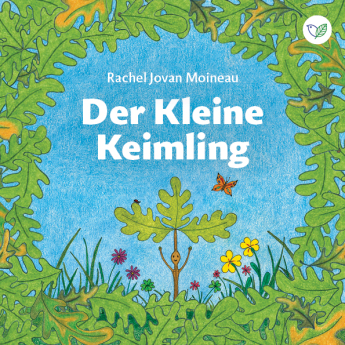
Exciting news, we have our first translated book! 🌟🥳